|
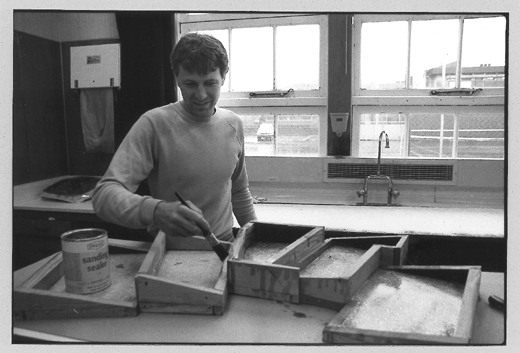
Once the
structure of the image is decided, a wooden support is built and sealed
with sanding sealer to prevent acid vapors and migration from attacking
the photographic images.
|

|
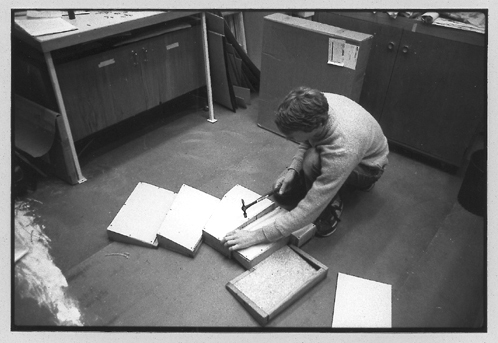
Acid
free covers are then tacked in place, forming a secure and safe base
for the photographs to be glued onto. |

|
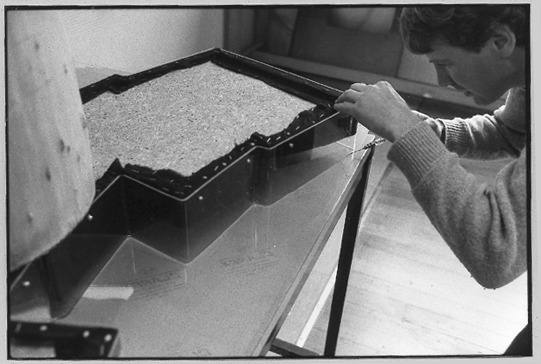
The
complete former is covered with black cotton cloth, and an acrylic edge
is bent to surround the edge of the work. This edge is then bonded to
an acrylic front cover with 1-1-2 Trichloroethane which is applied with
a syringe and needle. |
|
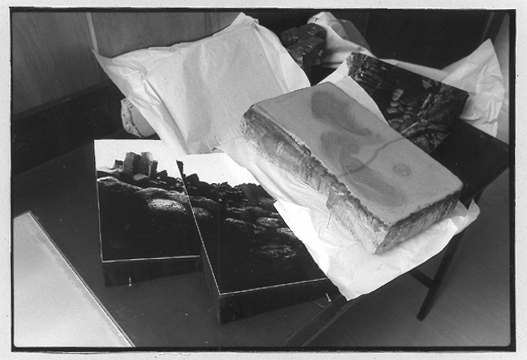
Next
the photographs which have been mounted onto aid free card, are glued
onto the cotton covers with methyl cellulose paste and held in place
with weight until dry. |

|
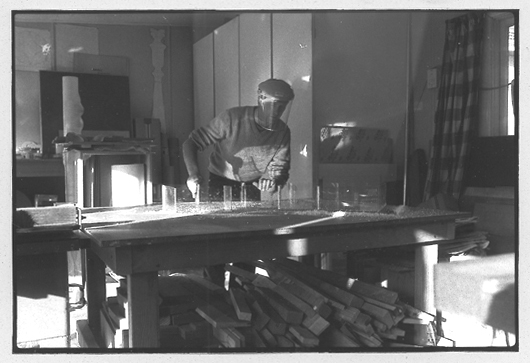
While
the photographs are being glued, the unwanted acrylic on the over is
removed to the shape of the edge with a router
(thanks to Derek Ball
for use of his studio) |
|
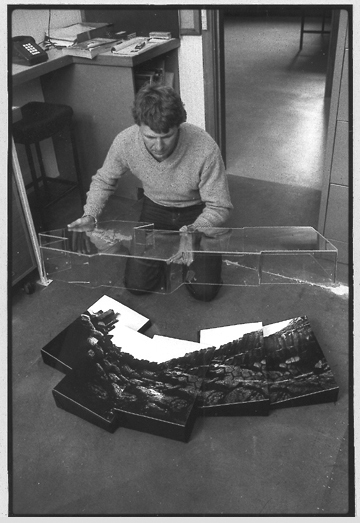
after
a clean and polish, the cover is finished and ready for fixing
in place over the images |
|
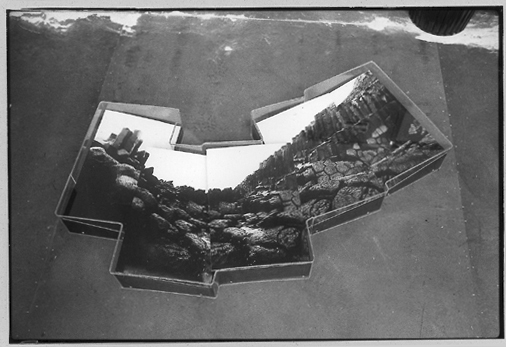
The
finished work on the studio floor ready for hanging. |